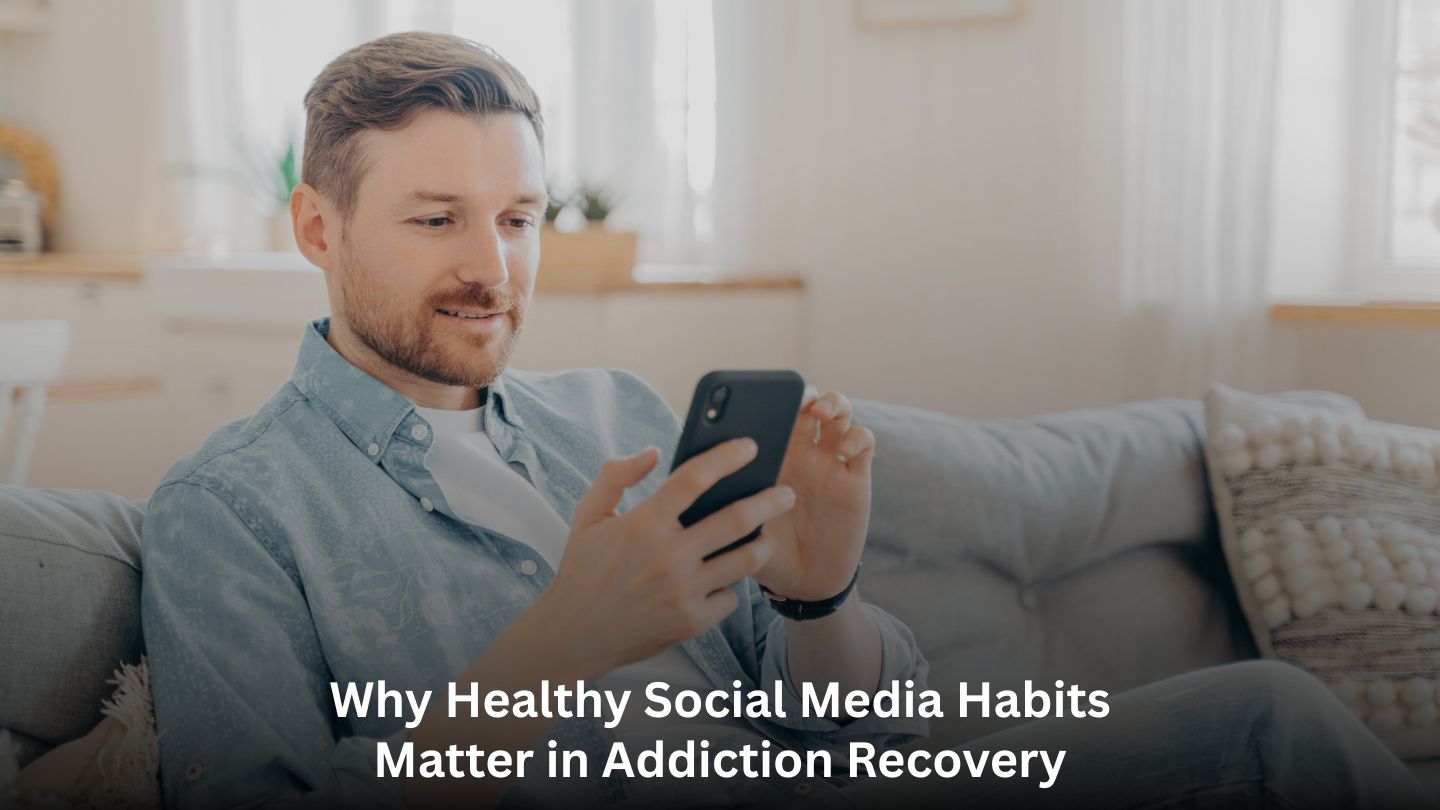


Most people in early recovery reach for their phone a hundred times a day without thinking about it, and that quiet habit can either help or quietly undermine the work they are doing. Social media is not the enemy, but it is rarely neutral either. The feeds, comparisons, and old contacts it surfaces all land differently when someone is rebuilding their life. In this blog, we’ll discuss why healthy social media habits matter in addiction recovery, how everyday scrolling affects mood and cravings, and what a healthier relationship with these platforms can look like.

The connection between phones and mood is not just a feeling. Social platforms are built to hold attention, and they do that by delivering small, unpredictable rewards that keep people checking back. For someone whose brain is already relearning how to handle reward and impulse, that design is worth understanding rather than ignoring. The same loops that make a feed hard to put down can make emotional regulation harder in the early months.
This matters because recovery depends heavily on managing internal states, and a phone can swing those states quickly. A few minutes of scrolling can shift someone from calm to anxious, from content to inadequate, often without any obvious trigger. Looking at what addiction does to the brain helps explain why those swings hit harder in recovery, since the reward and impulse systems involved are the very ones still healing.
Early recovery is a stretch of real emotional sensitivity. Sleep is often unsettled, moods move fast, and the coping tools that used to blunt hard feelings are gone. Into that already full picture arrives a device that offers constant stimulation, comparison, and distraction on demand. It is easy to see why healthy social media habits matter so much during this period rather than later on.
Understanding why healthy social media habits are important in addiction recovery starts here, because the goal is not to treat phones as dangerous or to demand that anyone delete every app. That rarely lasts and often backfires. The more useful aim is awareness: noticing how specific platforms, accounts, and times of day actually affect you, then making small adjustments. Recovery is already asking a lot, and a calmer relationship with social media removes one more source of unnecessary strain.
None of these are unique to recovery, but each one carries more weight when a person is working to stay stable. Recognizing which ones affect you most is the first practical step toward managing them.
Comparison is a big part of why healthy social media use matters in addiction recovery, and it is the quiet problem with most feeds. Everyone posts their highlights, so scrolling becomes an endless reel of other people’s best moments measured against your ordinary Tuesday. In recovery, where self-worth is often already fragile, that gap can feel sharper. It is easy to conclude that everyone else is further ahead, more successful, and less of a mess, none of which is true or fair.
That slide from comparison into low mood deserves attention, because low mood is not harmless in recovery. Feeling inadequate, isolated, or hopeless are well-known relapse risks. The link between addiction and depression is well documented, and a daily habit that steadily feeds negative self-comparison can quietly nudge someone toward exactly the headspace they are working to avoid.
Social media keeps the past unusually close. Old friends from using days, dealers, accounts that romanticize substance use, and photos from that period are often only a tap away. A single notification can drag someone straight back into a world they have been carefully stepping away from, and it can happen before they have even decided to look.
This is where some deliberate housekeeping pays off. Unfollowing or muting accounts tied to old patterns, removing contacts who still use, and clearing out content that glorifies drinking is not about pretending the past did not happen. It is about not inviting it into your pocket every day. A feed that reflects the life you are building, rather than the one you left, supports the work instead of competing with it.
Awareness only helps if it turns into a few concrete changes, and the useful ones tend to be simple. Setting app time limits, keeping the phone out of the bedroom overnight, and choosing specific windows to check feeds rather than grazing all day all reduce the low-grade pull that scrolling exerts. Small friction, added on purpose, makes a real difference.
Curating who and what you follow matters just as much as how long you spend. Filling a feed with recovery accounts, genuine interests, and people who lift rather than drain you changes the entire experience of opening an app. Writing things down helps here too, and the benefits of journaling recovery extend naturally to tracking how different online habits affect your mood over a week or two.
For all its risks, social media is not something to write off. Used with intention, the same platforms can genuinely strengthen recovery. Online meetings, recovery communities, and sober accounts offer connection at any hour, which matters a great deal at eleven at night when a craving hits and the usual support is asleep. For people who feel isolated, that access can be a lifeline rather than a hazard.
There is real value in connection and visibility, too. Following people who are open about their recovery normalizes the ups and downs and reduces the sense of going through it alone. Some find that sharing their own progress adds a layer of gentle accountability, and the role of accountability in lasting recovery is hard to overstate. The platform is the same. The intention behind using it is what changes the outcome.
Sleep is one of the first things to suffer when a phone comes to bed, and it is one of the last things recovery can afford to lose. The light from a screen, the steady stream of new posts, and the pull to check one more thing all push bedtime later and make the sleep that follows shallower. For someone whose body is still relearning a normal rhythm, that nightly cost adds up fast.
Poor sleep then feeds straight back into everything else. Cravings feel stronger, moods swing wider, and small frustrations become harder to shrug off after a short night. Protecting the last hour before bed from scrolling is one of the simplest changes available, and it tends to improve far more than just how rested someone feels in the morning.

The importance of healthy social media habits in addiction recovery shows up most clearly in boundaries, which sound restrictive but in practice are mostly about protecting your own time and attention. That might mean no phone during meals, no scrolling within an hour of bed, or stepping away from a particular platform entirely for a while. These are not punishments. They are small decisions that keep the device serving your recovery rather than quietly working against it.
It helps to treat boundaries as flexible experiments rather than permanent rules. Try something for a week, notice whether your sleep, mood, and cravings shift, then keep what works and drop what does not. Recovery is personal, and the right relationship with social media will look different from one person to the next. The point is to stay honest about what actually helps you feel steady.
Social media is woven into daily life, and recovery does not require giving it up. What it does reward is paying attention. Noticing how feeds affect your mood, trimming the accounts that pull you backward, setting a few limits, and leaning on the communities that genuinely help all turn a potential liability into something closer to a tool. The habit itself is not the problem. The relationship with it is what matters.
At The Cleveland House, we help residents build the kind of daily structure that makes healthier habits, online and off, far easier to sustain. Whether you are starting addiction treatment, focused on alcoholism recovery, working through a 12 Step Program, or managing a quick Suboxone taper, our approach to addiction recovery in Fort Lauderdale supports the whole picture of a person’s life. Contact us, and we can talk through how a stable, supportive environment could help you or someone you love.