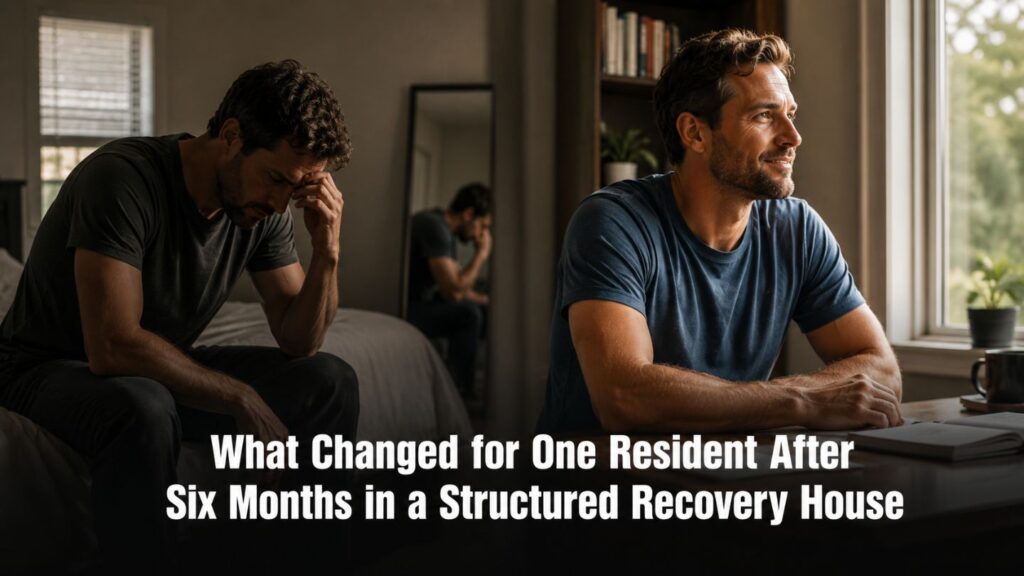


Recovery doesn’t usually happen overnight. Real progress comes from showing up each day, building healthier habits, and learning how to navigate life with the right support. For many people, a structured recovery house provides the consistency needed to make those changes stick. In this blog, we’ll discuss what a typical recovery house resident’s experience after six months can look like, the milestones often reached along the way, and why structure, accountability, and community continue to make a meaningful difference in long-term recovery.
The first few weeks in a recovery house often focus on adjustment. New residents learn routines, attend meetings, follow house expectations, and begin rebuilding daily structure. At first, these responsibilities may feel unfamiliar or even overwhelming. However, consistency gradually replaces uncertainty, allowing recovery to become part of everyday life instead of something that requires constant effort.
Understanding how halfway houses bridge recovery and reintegration can also clarify why this structured period is valuable before someone returns to fully independent living. By the six-month mark, many residents notice changes that extend far beyond avoiding alcohol or drugs.
They often communicate better, manage stress more effectively, and respond differently to challenges. This recovery house resident’s progress after six months reflects the accumulation of small daily choices that gradually reshape habits, thinking patterns, and confidence.
A structured recovery house offers more than a place to stay. It provides an environment where healthy routines become normal. Wake-up times, chores, work schedules, meetings, and personal responsibilities all contribute to creating stability that may have been missing before recovery.
Rather than feeling restrictive, these routines often become empowering. Residents begin relying less on motivation and more on consistency. Over time, everyday responsibilities no longer feel like obligations but become part of a balanced lifestyle that supports continued sobriety.
Daily routines often include:
None of these habits creates dramatic overnight changes on their own. Together, however, they establish a strong foundation for long-term recovery.

One of the biggest differences after several months often happens internally. Early recovery can feel emotionally intense because substances are no longer masking difficult feelings. Residents frequently learn healthier ways to experience emotions instead of avoiding them.
After six months, many individuals notice they recover more quickly from disappointment, frustration, or anxiety. They become better at identifying triggers before situations escalate. Instead of reacting impulsively, they begin responding thoughtfully, an important milestone that supports continued recovery.
Addiction often damages relationships with family, friends, coworkers, and even oneself. Healing those relationships takes time, patience, and consistent actions rather than promises.
By six months, many residents begin rebuilding trust through reliability. Family members may notice improved communication. Friends who support sobriety often become a larger part of everyday life. At the same time, residents become more comfortable creating boundaries with people or environments that threaten their recovery.
Healthy relationships also develop inside the recovery house. Living alongside people working toward similar goals creates opportunities for encouragement, accountability, and genuine friendships based on shared growth instead of shared substance use.
Confidence doesn’t usually return because someone simply feels better. It grows because people begin keeping commitments to themselves and others. Residents often take on greater responsibilities as they progress through recovery. Holding a steady job, managing finances, arriving on time, following through on commitments, and contributing to the household all reinforce the belief that positive change is possible.
This renewed confidence influences nearly every area of life. Individuals become more willing to pursue career goals, reconnect with loved ones, and make decisions that support their future rather than immediate gratification.
Life doesn’t suddenly become problem-free after entering recovery. Bills still need to be paid. Work can become stressful. Family disagreements may continue. The difference lies in how those situations are handled.
Instead of turning to substances during difficult moments, residents learn practical coping strategies that help them remain steady during uncertainty. These might include:
Developing these responses often represents one of the most meaningful aspects of life after six months in a recovery house because they prepare residents for long-term independence.
Early recovery frequently focuses on getting through each day. Once stability develops, residents often begin thinking further ahead. Instead of simply avoiding relapse, they start building a future they genuinely want.
Goals may include advancing a career, returning to school, repairing family relationships, improving physical health, saving money, or finding permanent housing. These ambitions become realistic because the foundation supporting them has already been established.
For residents returning to work, understanding how a recovery house supports career rebuilding can show how stable routines, accountability, and renewed confidence contribute to professional progress. The shift from surviving each day to planning for the future represents an important psychological milestone that reflects increasing confidence and personal growth.
Some people assume accountability becomes unnecessary after several months of sobriety. In reality, ongoing accountability often remains one of recovery’s greatest strengths. House expectations, peer encouragement, recovery meetings, and regular check-ins help residents stay focused even when life becomes busy. Accountability isn’t about punishment.
Instead, it creates opportunities for honesty before small struggles become larger setbacks. Many residents eventually discover that asking for support demonstrates strength rather than weakness. This mindset often becomes one of the most valuable lessons carried beyond the recovery house.
While every person’s journey differs, understanding what daily life inside a recovery house can look like helps explain how personal growth fits alongside everyday responsibilities. A resident may begin the morning with exercise or quiet reflection before heading to work. After work, they return to complete household responsibilities, attend a recovery meeting, spend time connecting with peers, prepare dinner, and relax before following a consistent bedtime routine.
Although this schedule may sound simple, it reflects tremendous growth compared to life before recovery. Stability, predictability, and healthy decision-making gradually replace chaos and uncertainty.
Six months should never be viewed as the finish line. Recovery continues long after this milestone. Some residents still experience cravings, difficult emotions, or unexpected life events that test their resilience.
The important difference is that they now possess more tools, stronger support systems, and greater self-awareness. Rather than facing challenges alone, they understand the value of reaching out early and remaining connected to recovery resources. Recognizing that growth continues beyond six months helps set realistic expectations while encouraging continued progress.

When people hear the phrase recovery home resident transformation after six months, they may imagine dramatic life changes. While those certainly happen for some individuals, the most meaningful transformations are often quieter. Someone who once struggled to keep a job now arrives on time every day. A person who avoided family conversations now rebuilds trust through consistent actions.
Someone overwhelmed by daily responsibilities now manages a schedule with confidence. These changes may appear ordinary from the outside, but for someone in recovery, they represent extraordinary progress. Each positive decision builds upon the last, creating a lifestyle that supports long-term sobriety rather than temporary success.
Six months create momentum, but continued recovery depends on maintaining the habits that made those changes possible. Ongoing support, healthy routines, personal accountability, and meaningful relationships continue playing important roles long after this milestone.
Every resident’s path will be different, yet many discover that recovery becomes less about avoiding the past and more about building a future they genuinely value. With continued commitment and support, the progress made during these first six months can become the foundation for years of healthier living.
The six-month mark reminds us that meaningful recovery is built one day at a time. While every journey looks different, consistent routines, supportive relationships, personal responsibility, and steady emotional growth often create lasting change. The progress made during this period isn’t simply measured by time, but by the healthier life someone gradually builds through everyday decisions.
At The Cleveland House, we understand that every stage of recovery deserves ongoing support. Whether you’re exploring a 12 Step Program or looking for sober living in Pompano Beach, FL, Tarpon River, FL, West Palm Beach, FL, and nearby communities. Wanting to learn more about alcoholism recovery, our recovery house in South Florida provides a supportive environment focused on long-term success. Contact us to learn how we can help you or your loved one take the next step with confidence.
